
📅 Updated: August 2026 | ⏱ 15-minute read | ✅ Medically & Legally Reviewed
Introduction
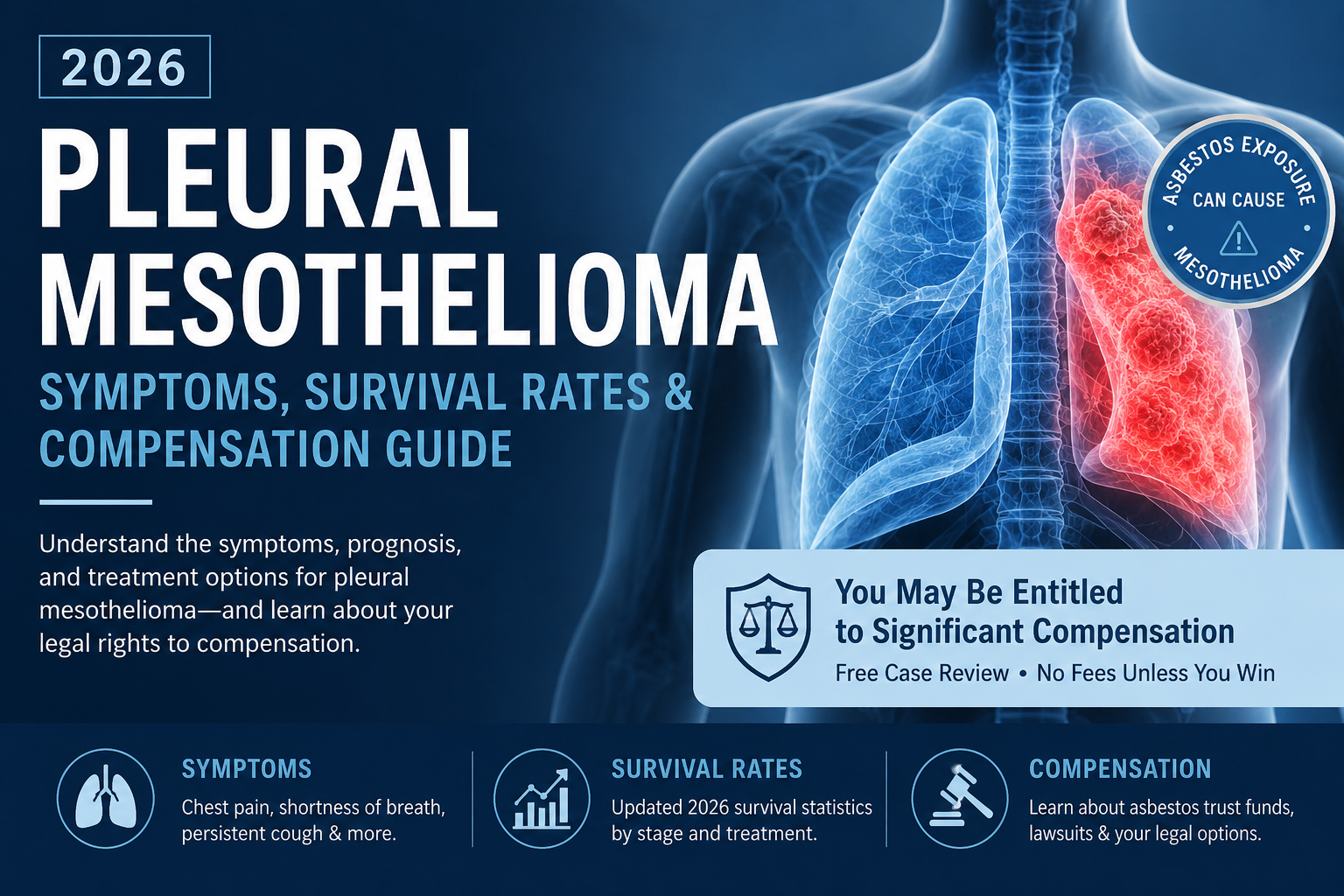
Pleural mesothelioma is the most common form of mesothelioma – accounting for approximately 75% of all diagnoses in the United States each year. It develops in the pleura, the thin two-layered membrane that surrounds the lungs and lines the chest cavity.
It is caused by one thing: asbestos exposure. When microscopic asbestos fibers are inhaled, they can lodge in the pleural lining and remain there for decades, triggering cellular changes that eventually develop into cancer. By the time symptoms appear, the disease is often already advanced.
That’s the hard truth. But here’s what matters more right now:
- Patients diagnosed with pleural mesothelioma do have treatment options – including surgery, chemotherapy, immunotherapy, and clinical trials.
- Most patients have legal rights to compensation – even if their asbestos exposure happened 30 or 40 years ago.
- Early action – on both the medical and legal front – produces significantly better outcomes.
This guide covers everything you need to know: what pleural mesothelioma is, how it’s diagnosed, what treatment looks like in 2026, what survival rates actually mean for you, and how to pursue the compensation your family deserves.
What Is Pleural Mesothelioma?
Pleural mesothelioma is a malignant cancer of the pleural lining – the tissue that encases the lungs and chest wall. There are two layers to the pleura:
- The visceral pleura, which covers the lung itself
- The parietal pleura, which lines the chest wall, diaphragm, and mediastinum
Between these two layers is a small amount of fluid that allows the lungs to move smoothly during breathing. When mesothelioma develops, tumors form along these layers and the fluid space can become filled with excess fluid – a condition called pleural effusion – which compresses the lungs and makes breathing painful and difficult.
How Is Pleural Mesothelioma Different from Other Types?
| Type | Location | Share of Cases | Median Survival |
|---|---|---|---|
| Pleural | Lung lining | ~75% | 12–18 months |
| Peritoneal | Abdominal lining | ~20% | 3–5+ years (with HIPEC) |
| Pericardial | Heart lining | ~1% | 6 months |
| Testicular | Testicular lining | <1% | 20–23 months |
Pleural mesothelioma is the most common – and in many ways the most studied – form. That means more clinical trials, more treatment data, and more legal precedent for compensation.
How Asbestos Causes Pleural Mesothelioma
When asbestos-containing materials are disturbed – during construction, demolition, shipbuilding, insulation installation, or manufacturing – microscopic fibers become airborne. These fibers are invisible to the naked eye, odorless, and tasteless. You cannot feel them when you breathe them in.
Once inhaled, many fibers are expelled naturally. But some – particularly the thin, needle-like amphibole fibers (crocidolite, amosite) – penetrate deep into the lung tissue and become permanently embedded in the pleural lining.
Over the following 20 to 50 years, these fibers cause chronic inflammation, genetic damage, and eventually malignant transformation. This extraordinarily long latency period is why most patients are diagnosed in their 60s, 70s, and 80s – long after their workplace exposure has ended.
High-Risk Occupations for Pleural Mesothelioma
- Shipbuilders and Navy veterans – asbestos was used extensively in ship construction and repair through the 1970s
- Construction workers – insulation, roofing, flooring, drywall compounds, and pipe lagging
- Electricians and plumbers – pipe insulation, boiler rooms, and electrical panels
- Automotive mechanics – brake pads, clutch linings, and gaskets
- Steelworkers and factory workers – industrial furnaces, boilers, and fireproofing
- Railroad workers – locomotive insulation and brake systems
- School and building maintenance workers – older buildings installed before 1980 frequently contain asbestos
Secondary exposure is also a documented cause. Spouses and children who laundered work clothing contaminated with asbestos dust have developed pleural mesothelioma as a result.
Pleural Mesothelioma Symptoms
One of the most dangerous features of this disease is how slowly symptoms appear – and how easily they are mistaken for something else.
Early-Stage Symptoms (Stages 1–2)
Early-stage pleural mesothelioma often produces no symptoms at all, or symptoms so mild they are dismissed. When they do appear, they typically include:
- Shortness of breath (dyspnea) – often first noticed during physical activity
- Dull, persistent chest pain – usually on one side
- Dry or slightly productive cough – often misread as bronchitis or a respiratory infection
- Fatigue – dismissed as aging or general health decline
- Mild fever or night sweats – intermittent, easy to ignore
These symptoms are frequently misdiagnosed as pneumonia, pleural effusion of unknown cause, lung cancer, or COPD. Studies suggest that up to 50% of mesothelioma cases are initially misdiagnosed. If you or a family member has these symptoms and a history of asbestos exposure, push specifically for a mesothelioma evaluation.
Late-Stage Symptoms (Stages 3–4)
As the disease progresses and tumors grow, symptoms become more pronounced:
- Severe shortness of breath – even at rest
- Significant chest pain – often requiring pain management
- Pleural effusion – fluid accumulation that may require drainage (thoracentesis)
- Persistent cough, sometimes with blood
- Unexplained weight loss and muscle wasting
- Difficulty swallowing (dysphagia) as tumors press on the esophagus
- Facial or arm swelling (superior vena cava syndrome) in advanced cases
- Fever and night sweats
How Pleural Mesothelioma Is Diagnosed
Diagnosis requires multiple steps. No single test confirms mesothelioma on its own.
Step 1: Imaging Scans
The diagnostic process typically begins when a chest X-ray or CT scan reveals pleural thickening or fluid accumulation. Imaging used includes:
- Chest X-ray – first-line indicator, often shows pleural effusion
- CT scan – provides detailed images of tumor location, size, and spread
- PET scan – identifies metabolic activity and helps determine staging
- MRI – used to assess extent of invasion into chest wall or diaphragm
Step 2: Biopsy – The Only Definitive Diagnosis
Imaging can strongly suggest mesothelioma, but only a tissue biopsy can confirm it. Biopsy types include:
- Thoracoscopy (VATS) – minimally invasive camera procedure; most common and preferred
- CT-guided needle biopsy – less invasive, but may yield fewer cells
- Open surgical biopsy – used when other methods are insufficient
The tissue sample is then analyzed by a pathologist who identifies the cell type – which significantly affects treatment options and prognosis.
Cell Types of Pleural Mesothelioma
| Cell Type | Frequency | Prognosis |
|---|---|---|
| Epithelioid | ~60–70% | Best prognosis; most responsive to treatment |
| Sarcomatoid | ~10–20% | Poorest prognosis; less responsive to treatment |
| Biphasic (mixed) | ~20–30% | Intermediate; outcome depends on ratio of cell types |
Step 3: Biomarker Testing
In 2026, biomarker blood tests can support – though not replace – biopsy diagnosis. Key markers include:
- Mesothelin (SMRP) – elevated in ~80% of epithelioid cases
- Fibulin-3 – elevated in pleural fluid and serum
- BAP1 loss – detected via immunohistochemistry; associated with inherited susceptibility
Stages of Pleural Mesothelioma
Pleural mesothelioma is staged using the IMIG TNM staging system, which assesses Tumor size, lymph Node involvement, and Metastasis.
Stage 1 – Localized
Tumor is confined to one side of the pleura. No lymph node involvement. Surgical resection is most likely possible. Best prognosis.
Stage 2 – Limited Spread
Tumor has grown into the diaphragm or lung tissue on the same side. Lymph nodes may be involved. Surgery may still be possible. Multimodal treatment is the standard approach.
Stage 3 – Regional Spread
Tumor has spread into the chest wall, pericardium, or lymph nodes on the opposite side. Surgery is more limited in scope. Systemic therapies (immunotherapy + chemotherapy) become the focus.
Stage 4 – Distant Spread
Tumor has spread to distant organs (bone, brain, opposite lung) or across the diaphragm. Surgery is typically not an option. Treatment focuses on quality of life, symptom management, and extended survival through systemic therapy and clinical trials.
Important: Stage does not determine everything. Cell type, overall health, age, and the treatment center you choose all significantly influence outcomes. Stage 4 patients have lived years beyond median projections with the right treatment team.
Treatment Options for Pleural Mesothelioma in 2026
Treatment for pleural mesothelioma has evolved significantly in recent years. The current standard is multimodal therapy – combining two or more treatment types for the best possible outcome.
Surgery
Surgery is the only treatment that physically removes tumor tissue from the body. Two primary procedures are used for pleural mesothelioma:
- Extrapleural Pneumonectomy (EPP) – removes the affected lung, pleura, part of the diaphragm, and pericardium. Aggressive; used in younger, fit patients with early-stage disease.
- Pleurectomy/Decortication (P/D) – removes the pleura and visible tumor while preserving the lung. Preferred at most major centers in 2026 due to equivalent or better survival with lower mortality risk.
Surgery is typically combined with chemotherapy (before or after) and increasingly with immunotherapy. Learn more about EPP vs. P/D →
Chemotherapy
Chemotherapy remains a cornerstone of treatment for pleural mesothelioma – used as a first-line treatment, pre-surgery, post-surgery, and for patients who are not surgical candidates.
The standard first-line regimen is cisplatin + pemetrexed (Alimta). For patients who cannot tolerate cisplatin, carboplatin is substituted.
A newer option – carboplatin + pemetrexed + bevacizumab (Avastin) – has shown improved outcomes in some trials and is increasingly used at specialist centers. Learn more about chemotherapy options →
Immunotherapy
The most significant treatment advance of the past decade. In October 2020, the FDA approved nivolumab + ipilimumab (Opdivo + Yervoy) for unresectable pleural mesothelioma – the first new FDA-approved treatment in 16 years.
Five-year data from the CheckMate 743 trial (presented at ASCO 2026) confirmed that 14% of patients treated with the combination were still alive at five years – a remarkable outcome for a disease where median survival was historically under 18 months.
Immunotherapy is now a standard option for:
- Patients with unresectable disease
- Patients who progressed after chemotherapy
- First-line treatment in combination with chemotherapy at many centers
Learn more about Opdivo, Keytruda & immunotherapy →
Radiation Therapy
Radiation for pleural mesothelioma is used in specific scenarios – not as a primary standalone treatment, but as part of a multimodal approach:
- Adjuvant radiation after EPP to reduce local recurrence
- Palliative radiation to relieve pain from tumor involvement of the chest wall
- Intensity-Modulated Radiation Therapy (IMRT) – advanced technique that targets tumors while sparing surrounding organs
Learn more about radiation therapy →
Clinical Trials
In 2026, there are dozens of active clinical trials for pleural mesothelioma – investigating CAR-T cell therapy, tumor treating fields (TTFields), new immunotherapy combinations, and targeted therapies based on BAP1 and NF2 mutations.
Clinical trials are not a “last resort.” Many patients access cutting-edge treatments through trials before they reach standard approval – and at no cost. Learn about clinical trials →
Survival Rates & Prognosis in 2026
Survival rates are population averages. They do not predict what will happen to any individual patient.
Median Survival by Stage
| Stage | Median Survival |
|---|---|
| Stage 1 | 21+ months |
| Stage 2 | 19 months |
| Stage 3 | 16 months |
| Stage 4 | 12 months |
Median Survival by Cell Type
| Cell Type | Median Survival |
|---|---|
| Epithelioid | 18–24 months |
| Biphasic | 12–16 months |
| Sarcomatoid | 6–12 months |
What Improves Prognosis
- Earlier-stage diagnosis at time of treatment
- Epithelioid cell type
- Younger age and strong overall health (good performance status)
- Treatment at a high-volume mesothelioma specialist center
- Multimodal therapy (surgery + chemo + immuno) vs. single-modality
- Access to clinical trials for novel therapies
The most important prognostic factor that is within your control: where you get treated. Patients treated at dedicated mesothelioma centers consistently live longer than those treated at general oncology practices. This is not a small difference – studies have shown survival advantages of 6–12 months or more for patients treated by mesothelioma specialists.
Your Legal Rights & Compensation Options
A pleural mesothelioma diagnosis is almost always traceable to a specific asbestos exposure – and that exposure was almost always the result of corporate negligence. Companies that manufactured, sold, and installed asbestos products knew the risks for decades before warning the public.
That means most patients and their families have legal rights to compensation – regardless of how long ago the exposure occurred.
Types of Compensation Available
1. Asbestos Trust Fund Claims
Over $30 billion sits in asbestos bankruptcy trust funds, established by companies that produced asbestos products and later faced mass litigation. Filing a trust fund claim does not require a lawsuit or going to court. Claims can often be filed in parallel for multiple trusts. Learn about trust fund claims →
2. Personal Injury Lawsuits
If the responsible company is still solvent, your attorney can file a personal injury lawsuit seeking compensation for medical expenses, lost income, pain and suffering, and loss of quality of life. Average verdicts and settlements range from $1 million to $2.4 million.
3. Wrongful Death Claims
If a loved one has passed away from pleural mesothelioma, surviving family members – spouses, children, dependents – can file a wrongful death claim on their behalf. Learn about family compensation →
4. VA Benefits (Veterans)
Veterans with service-related asbestos exposure – particularly Navy veterans who served aboard ships with asbestos insulation – are eligible for VA disability compensation and healthcare benefits. These are separate from, and do not affect, any legal claims. Learn about Navy veteran claims →
5. Mesothelioma Payouts
The full compensation picture – average settlement amounts, verdict amounts, and how funds are distributed – is covered in our complete payout guide. See mesothelioma payouts →
Don’t Wait: The Statute of Limitations
Every state has a filing deadline – called the statute of limitations – for mesothelioma claims. Most states allow 1 to 3 years from the date of diagnosis (or, for wrongful death claims, from the date of death). Miss this deadline and you permanently forfeit your right to compensation.
Time passes quickly after a diagnosis. The best time to consult with a mesothelioma attorney is immediately after diagnosis – you do not need to have finished treatment, and a free consultation costs nothing. Check your state’s deadline →
How to Find a Pleural Mesothelioma Specialist
Not all oncologists have experience with mesothelioma. Because this disease is relatively rare and requires specialized expertise, who treats you matters enormously.
What to Look for in a Specialist
- A thoracic oncologist or surgeon with documented mesothelioma experience
- Affiliation with an NCI-designated cancer center or dedicated mesothelioma program
- Access to clinical trials and multidisciplinary tumor board review
- Willingness to provide a second opinion on diagnosis and treatment plan
Leading Mesothelioma Centers in the US (2026)
- MD Anderson Cancer Center – Houston, TX
- Memorial Sloan Kettering Cancer Center – New York, NY
- Brigham and Women’s Hospital – Boston, MA
- University of Chicago Medicine – Chicago, IL
- Moffitt Cancer Center – Tampa, FL
- University of California San Francisco (UCSF) – San Francisco, CA
A second opinion from a specialist center has never cost a patient their current treatment relationship – and has frequently changed treatment plans in ways that significantly extended survival.
Frequently Asked Questions
Q: What is the first sign of pleural mesothelioma?
A: The most common early symptom is shortness of breath, followed by chest pain on one side. These symptoms are frequently attributed to other conditions – especially in older patients. Anyone with a history of asbestos exposure who develops respiratory symptoms should specifically request evaluation for mesothelioma.
Q: Is pleural mesothelioma always fatal?
A: Pleural mesothelioma is a serious, life-threatening illness. However, median survival has improved substantially over the past decade, and some patients – particularly those with early-stage epithelioid disease treated at specialist centers – achieve long-term survival measured in years. The 2026 five-year survival data from immunotherapy trials offers genuine hope that was not available five years ago.
Q: Can you get pleural mesothelioma from secondhand asbestos exposure?
A: Yes. Secondary exposure – from asbestos dust on work clothing, brought home by family members – is a documented and legally recognized cause of mesothelioma. Spouses and family members who never set foot on a worksite have been diagnosed and have successfully pursued compensation.
Q: How long does it take to get mesothelioma after asbestos exposure?
A: The latency period is typically 20 to 50 years. Most patients are diagnosed long after their primary exposure has ended – often after they’ve retired from the industry where exposure occurred.
Q: Does filing a legal claim interfere with treatment?
A: No. Legal proceedings move on a separate track from medical treatment. The initial consultation and claim filing process does not require your physical presence or time away from treatment. Experienced mesothelioma attorneys are specifically structured to work around patients’ medical schedules.
Next Steps: What to Do After a Pleural Mesothelioma Diagnosis
If you or someone in your family has been diagnosed with pleural mesothelioma, here is the most important sequence of actions:
- Request a second opinion from a dedicated mesothelioma specialist center – even if your current oncologist is excellent.
- Confirm your cell type – epithelioid, sarcomatoid, or biphasic – as this shapes every treatment decision.
- Ask about clinical trials at your treatment center and at clinicaltrials.gov.
- Consult a mesothelioma attorney – free consultation, no obligation, and the clock on your statute of limitations is already running.
- Explore financial assistance – grants, funds, and free resources are available now, before any legal claim resolves. See financial assistance options →
Medical Disclaimer: This article is for informational purposes only and does not constitute medical advice. Always consult a qualified physician or specialist for diagnosis and treatment decisions.
Legal Disclaimer: This article provides general legal information, not legal advice. Compensation amounts vary by case. Consult a licensed mesothelioma attorney to understand your specific rights.