
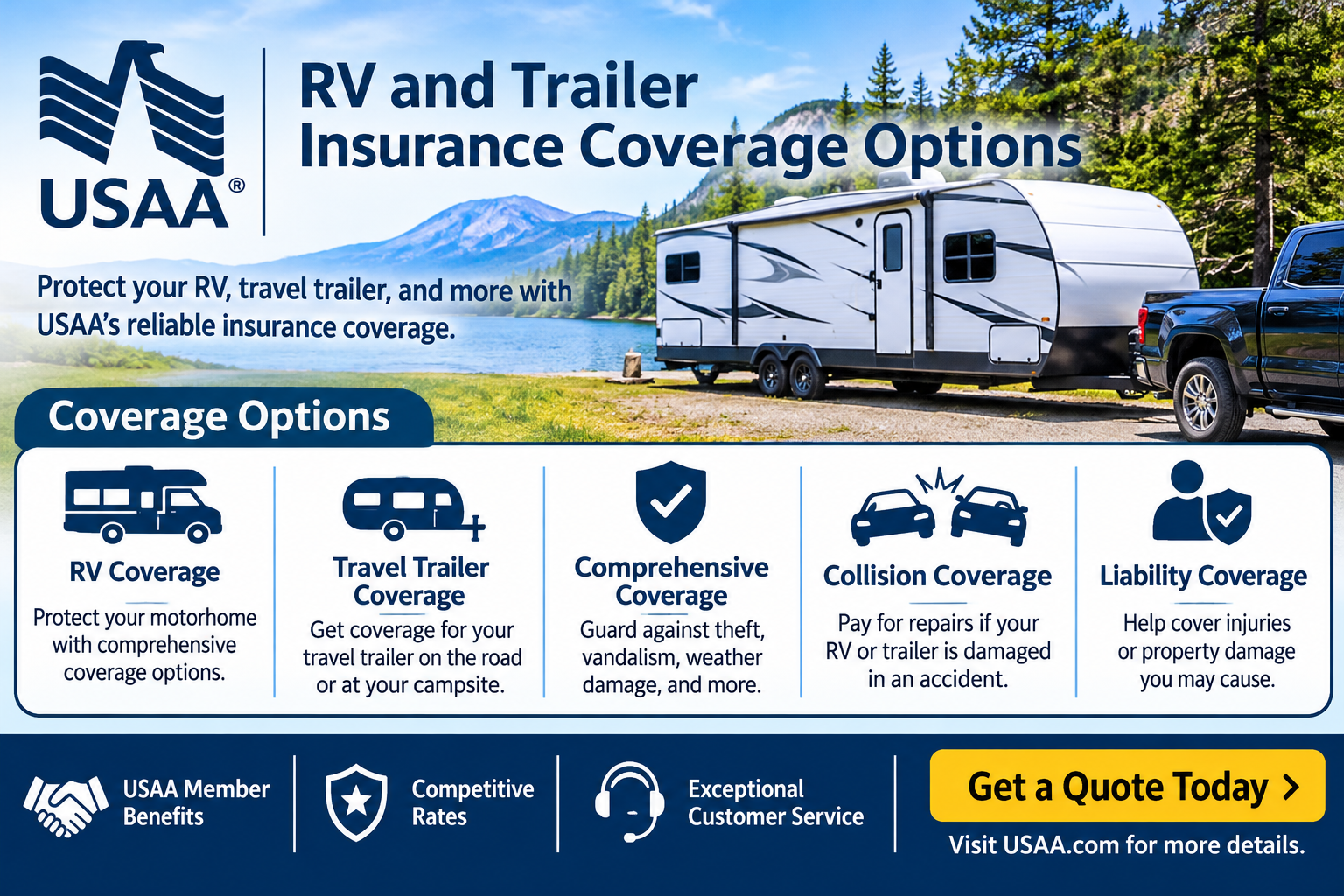
Planning a road trip with a camper or travel trailer requires more than preparing your vehicle for the journey. Having the right RV insurance can help protect your recreational vehicle, personal belongings, and finances against unexpected accidents, theft, and property damage.
USAA insurance offers access to recreational vehicle coverage options through its insurance agency and relationships with other insurance companies, including Progressive. Whether you own a motorhome, fifth-wheel camper, or travel trailer, understanding your insurance policy can help you choose the coverage you need.
In this guide, we explain USAA RV insurance, comprehensive and collision coverage, liability protection, trailer coverage, available discounts, and how to get a quote.
Understanding USAA RV Insurance
RV insurance is designed to help protect recreational vehicles against different risks that standard car insurance may not fully address. Depending on the type of vehicle you own, your insurance coverage may include physical damage protection, liability coverage, and personal property protection.
USAA serves eligible military members and their families and provides access to various insurance products and services. Through the USAA Insurance Agency, customers can also explore coverage from partner insurance companies.
What Is USAA RV Insurance?
USAA RV insurance refers to recreational vehicle insurance options available to eligible customers through USAA and its insurance agency relationships.
Unlike standard auto insurance, an RV insurance policy can provide protection for vehicles used for travel, camping, and recreational living. It can cover different types of recreational vehicles, including motorhomes, campers, fifth-wheel trailers, and travel trailers.
If you own a travel trailer, you may need separate insurance coverage to help protect the trailer itself. Your existing auto policy may provide liability protection while towing, but it generally does not pay to repair or replace your trailer after physical damage.
The exact type of coverage depends on the vehicle, insurer, location, and insurance policy terms.
Benefits of RV Insurance
Choosing suitable RV insurance can provide several benefits for recreational vehicle owners.
Some important benefits include:
- Physical damage protection: Comprehensive and collision coverage can help pay for covered damage to your RV.
- Liability protection: Helps cover eligible bodily injury and property damage claims involving other people.
- Personal belongings: Additional personal property coverage may help protect items stored inside your camper.
- Roadside assistance: Available options may help when your recreational vehicle breaks down.
- Vacation liability: Certain policies can help protect you against eligible liability claims while your RV is parked.
- Flexible coverage options: You can select different coverage limits and deductible amounts based on your needs.
These benefits can help protect your investment and reduce unexpected expenses during your travels.
How to Get a USAA Insurance Quote
If you want to insure a recreational vehicle, obtaining an insurance quote is a useful first step.
You can explore available options through the USAA website or contact the USAA Insurance Agency.
Follow these steps:
- Visit the official USAA website and explore its RV and motorhome insurance information.
- Review the available coverage options for your specific vehicle.
- Provide the necessary information about your camper, travel trailer, or motorhome.
- Compare deductible amounts, coverage limits, and available discounts.
- Review the insurance policy details before purchasing coverage.
USAA’s agency can also help eligible customers explore RV insurance options through its relationship with Progressive.
Types of RV Insurance Coverage Options
Understanding the different types of insurance coverage is essential before selecting a policy. Each recreational vehicle has different protection requirements, depending on whether it is driven independently or pulled behind another vehicle.
Here are some common coverage options to consider.
Comprehensive Coverage for RVs
Comprehensive coverage helps protect your recreational vehicle against certain unexpected events that do not involve a collision.
Depending on the insurance policy, comprehensive coverage may help pay for damage caused by:
- Theft
- Vandalism
- Fire
- Hailstorms
- Falling objects
- Weather-related incidents
- Collisions with animals
For example, imagine that someone breaks into your parked camper and damages its exterior. If the incident is covered under your comprehensive policy, your insurer may help pay for the necessary repair expenses after you pay your deductible.
Comprehensive protection is particularly useful for owners who store their travel trailer or motorhome for extended periods.
Collision Coverage Explained
Collision coverage helps pay for covered physical damage to your recreational vehicle following an accident involving another vehicle or object.
For example, if your travel trailer collides with another vehicle, a guardrail, or a stationary object, collision coverage may help cover the repair costs.
This type of coverage generally applies regardless of who caused the accident, subject to the policy terms.
When selecting comprehensive and collision coverage, consider the value of your recreational vehicle, your financial situation, and the deductible you can comfortably afford.
Liability Coverage for Trailers
Liability coverage is important because it helps protect you financially if you are legally responsible for injuries or property damage involving another person.
For a travel trailer being pulled by a car or truck, liability coverage generally extends from the auto policy covering the towing vehicle.
For example, if you accidentally hit another vehicle while towing your camper, your auto insurance liability coverage may help cover eligible bodily injury and property damage claims.
However, liability coverage and physical damage protection are different. Your towing vehicle’s auto policy generally will not pay to repair your own trailer following a collision.
Check your existing auto policy and speak with your insurer to understand the liability protection available while towing.
Trailer Insurance Coverage Details
Travel trailer insurance provides additional protection for owners who want to protect their trailers against unexpected damage, theft, and other covered losses.
Although your car insurance may provide liability protection while towing, separate trailer coverage can help protect the actual recreational vehicle.
Before purchasing an insurance policy, consider the trailer’s value, how frequently you use it, and whether you keep personal belongings or cargo inside.
Understanding Travel Trailer Insurance
Travel trailer insurance is designed for recreational units that are pulled behind a towing vehicle rather than driven independently.
A separate RV insurance policy may provide:
- Comprehensive coverage for theft, vandalism, fire, and other covered events.
- Collision coverage for accidental physical damage.
- Vacation liability protection for eligible incidents around your trailer.
- Personal property coverage for certain belongings stored inside.
- Additional protection depending on the insurer and selected policy.
Some lenders may require comprehensive and collision coverage if you finance your travel trailer.
The best coverage depends on your trailer’s value, usage, and individual circumstances.
Rental Trailer Coverage Options
Rental coverage is another area worth reviewing before using a recreational vehicle that you do not own.
If you rent a camper or travel trailer, do not automatically assume your existing auto policy provides complete protection.
Your current insurance policy may offer limited protection, but coverage depends on the rental agreement, vehicle type, insurer, and policy exclusions.
Before renting, ask whether your insurance will help cover physical damage, liability claims, and personal belongings.
You should also check whether the rental company provides its own insurance products or additional protection.
Understanding these details before signing a rental agreement can help prevent unexpected expenses.
Personal Property Protection
Personal property coverage can help protect certain belongings kept inside your RV or travel trailer.
These items may include:
- Clothing and personal accessories
- Electronic devices
- Camping equipment
- Furniture and household items
- Sporting equipment
- Other personal belongings
Some insurance policies offer personal effects coverage as an additional option.
It is important to understand that standard comprehensive and collision coverage generally protects the vehicle itself, not everything stored inside it.
If you regularly transport expensive cargo or personal property, ask your insurer about applicable coverage limits and exclusions.
Auto Insurance vs. RV Insurance
Understanding the difference between car insurance and RV insurance can help you avoid coverage gaps.
Although both insurance products provide financial protection, they are designed for different types of vehicles and risks.
Key Differences Between Auto and RV Policies
Standard auto insurance is primarily designed for passenger vehicles, such as cars, SUVs, and pickup trucks.
RV insurance provides additional coverage options for recreational vehicles, including motorhomes and travel trailers.
Here is a general comparison:
| Coverage | Car Insurance | RV Insurance |
|---|---|---|
| Vehicle liability | Yes | Yes, for applicable motorhomes |
| Collision protection | Available | Available |
| Comprehensive coverage | Available | Available |
| Trailer physical damage | Usually not included automatically | Available through suitable trailer coverage |
| Personal belongings | Limited or excluded | Additional coverage may be available |
| Vacation liability | Usually not included | Available on eligible policies |
Your auto policy may extend liability coverage to a trailer while it is being towed. However, you should not assume that it provides comprehensive and collision coverage for the trailer.
When to Choose RV Insurance Over Auto Insurance
Choosing RV insurance instead of relying only on standard auto insurance is important when you own a motorhome or want physical damage protection for a travel trailer.
A dedicated policy can provide coverage options that are not normally included in a basic auto policy.
For example, comprehensive and collision coverage may help pay for covered damage to your camper following an accident, theft, or other insured event.
If you use your recreational vehicle as a temporary home, additional liability and personal property protection may also be worth considering.
USAA Auto Policy Insights
Reviewing your existing USAA auto policy can help you understand what protection applies when towing a camper or travel trailer.
USAA explains that liability for campers and travel trailers pulled behind a car generally extends from the auto policy covering the towing vehicle.
However, the towing vehicle’s auto policy usually does not provide physical damage protection for the trailer itself.
The USAA Insurance Agency also works with Progressive to provide access to RV insurance options.
When reviewing your USAA auto policy, ask about towing-related liability, trailer damage, additional coverage, and available insurance products.
Discounts and Savings on RV Insurance
The cost of RV insurance depends on several factors, including the vehicle type, location, coverage limits, deductible, and driving history.
Comparing different insurance companies can help you find a suitable policy without paying for unnecessary coverage.
Available Discounts for USAA Members
Eligible USAA members may qualify for savings on recreational vehicle insurance.
According to USAA, available RV savings opportunities include:
- Member discount: Eligible members automatically qualify for a discount on many RV coverage options.
- Responsible driver discount: Drivers with a qualifying accident- and ticket-free history may receive savings.
- Paid-in-full discount: Certain states offer savings when you pay your annual premium in full.
- Electronic funds transfer discount: Automatic payments may qualify for additional savings.
Discount availability and eligibility requirements vary by state and policy.
Military members and eligible families should review their available benefits and ask which discounts apply to their insurance policy.
How to Maximize Savings on RV Insurance
You can potentially reduce your insurance premium by reviewing your coverage requirements and comparing available options.
Consider these practical steps:
- Compare quotes from different insurance companies.
- Review your comprehensive and collision coverage limits.
- Choose a deductible that fits your budget.
- Ask about eligible discounts.
- Consider bundling insurance products when available.
- Review your policy regularly to make sure your coverage still matches your needs.
A higher deductible may reduce your premium, but you will have to pay more out of pocket when making an eligible claim.
Always balance affordability with the level of protection you need.
Comparing USAA with Other Insurers
Comparing USAA with Progressive and other insurance providers can help you understand the available coverage options.
USAA provides access to recreational vehicle insurance through its agency relationships, including Progressive.
Progressive offers different RV insurance products for motorhomes, travel trailers, fifth wheels, and other recreational vehicles.
When comparing an insurer, consider:
- Available liability coverage
- Comprehensive and collision protection
- Personal property limits
- Roadside assistance
- Deductible amounts
- Available discounts
- Claims service and policy exclusions
The cheapest insurance quote is not necessarily the best choice. Look at the coverage provided and what the insurer will actually pay for a covered loss.
Frequently Asked Questions
Does USAA offer RV insurance?
USAA provides access to RV insurance options through its insurance agency and relationships with insurance providers, including Progressive. Availability and eligibility depend on your location and circumstances.
Does my USAA auto policy cover a travel trailer?
Your USAA auto policy may extend liability coverage to a travel trailer while it is being towed. However, physical damage to the trailer generally requires separate coverage.
Does comprehensive coverage protect against theft and vandalism?
Yes. Comprehensive coverage can help pay for covered losses caused by theft, vandalism, fire, weather-related events, and other non-collision incidents, subject to your deductible and policy exclusions.
Do I need insurance for a travel trailer?
Requirements depend on state laws, financing agreements, and how you use your trailer. Even when separate insurance is not legally required, it can help protect your investment against physical damage and other covered losses.
Can RV insurance cover personal belongings?
Some RV insurance policies offer personal property or personal effects coverage. This may help protect eligible belongings stored inside your recreational vehicle, subject to coverage limits.
How can I get a USAA RV insurance quote?
You can visit the official USAA website to explore RV insurance information and available options. The USAA Insurance Agency can also help eligible customers connect with its insurance partners.
Final Thoughts
Choosing the right RV insurance is an important part of protecting your recreational vehicle and personal belongings. Whether you own a motorhome, camper, or travel trailer, understanding comprehensive coverage, collision protection, liability coverage, and deductible options can help you make a more informed decision.
USAA offers eligible customers access to RV insurance options through its insurance agency relationships, including Progressive. Before purchasing a policy, compare the available insurance coverage, review exclusions, and confirm exactly what your insurer will help cover.
Important: Insurance products, coverage limits, discounts, and availability vary by state and insurance provider. The information in this article is for general educational purposes and is not a substitute for reviewing your actual insurance policy.